Hip Replacement Surgery Treatment in Rutherford
You have rested it, stretched it, and waited for it to pass. If the pain keeps deciding what you can and cannot do, one evaluation is where the plan finally changes.
Why hip replacement surgery happens, and why rehab matters.
Most patients arrive at hip replacement after years of a joint that has slowly stopped cooperating, or after a fracture that left surgery as the only real option. Either way, the surgery itself is only half the outcome. What your hip can actually do afterward, walk evenly, climb stairs, get in and out of a car without thinking about it, depends heavily on the rehab that follows it. Structured physical therapy after hip replacement is standard of care for a reason: it is consistently associated with a better functional result than surgery alone.

The most common reason people end up here is years of osteoarthritis wearing down the cartilage in the joint until it is essentially bone on bone. Once conservative care stops making a real difference, replacement becomes the option that restores a working joint.
A fall that fractures the hip can damage the joint beyond what can be repaired, especially in older adults. In these cases, replacement is often the fastest and most reliable way back to safe, independent walking.
Sometimes it is an old injury or a joint problem that quietly worsened over a long stretch of time, with the body compensating along the way. By the time surgery happens, those years of compensation have usually left real deficits that rehab needs to address directly.
The glutes and hip flexors around a painful joint are often significantly weakened long before surgery ever happens, simply from years of the body avoiding pain. That weakness does not disappear once the new joint is in place, it has to be rebuilt on purpose.
The movement restrictions your surgeon gives you depend on the specific surgical approach used. Your therapist works from that protocol directly, so early movement stays safe while it also stays productive.
Progressing too fast or too slow can both cost you function. The pace of your recovery is what turns a successful surgery into a hip that actually holds up to daily life, which is why the timeline matters as much as the surgery itself.
How physical therapy supports your hip replacement recovery.
The first thing your therapist does is find out exactly what your surgeon's protocol allows. Movement restrictions vary depending on the surgical approach used, and your early sessions are built around following those precautions while still making real progress. From there, the priority is your walking pattern. A new hip changes how your body wants to move, and left alone that often turns into a limp or an uneven gait that sticks around long after it needs to. Hands-on work and guided walking retrain that pattern early, while gentle range of motion work and swelling management keep the joint from stiffening up. As you clear the first weeks, the focus shifts to strength, specifically the glutes and hip flexors, which are almost always significantly weakened both from years of the joint hurting beforehand and from the surgery itself. Rebuilding that strength is what lets you carry your own weight through the joint with confidence instead of hesitation. From there we work on weaning off a walker or cane as soon as it is safe, managing stairs, rebuilding balance, and returning to the normal daily activities surgery was meant to give back. Every session is one on one, and the plan moves at the pace your hip is actually ready for, not a generic schedule.
What to expect from your hip replacement recovery.
Evaluation and safe mobility
Your first visit starts with a full review of your surgeon's precautions and surgical approach, then a hands-on assessment of how you are moving, walking, and managing swelling. You leave with a clear picture of where you stand and what the early weeks will look like.
Hands-on treatment and progressive range of motion
Next we work on restoring hip range of motion and evening out your walking pattern through hands-on treatment and guided movement. Strength work for the glutes and hip flexors ramps up steadily as your body clears each stage safely.
Strength, balance, and return to daily life
In the final phase we push strength and balance further, wean you off the walker or cane as it's safe to do so, and work through stairs and real-world tasks. The goal is a hip that carries you through your normal day without an assistive device.
I am a male in his seventies who was prescribed physical therapy by an Orthopedist Doctor because of lower back and hip trauma, which caused pain and impaired movement. I recently completed therapy and am now pain free with significantly improved mobility and strength.
Pain rarely travels alone.
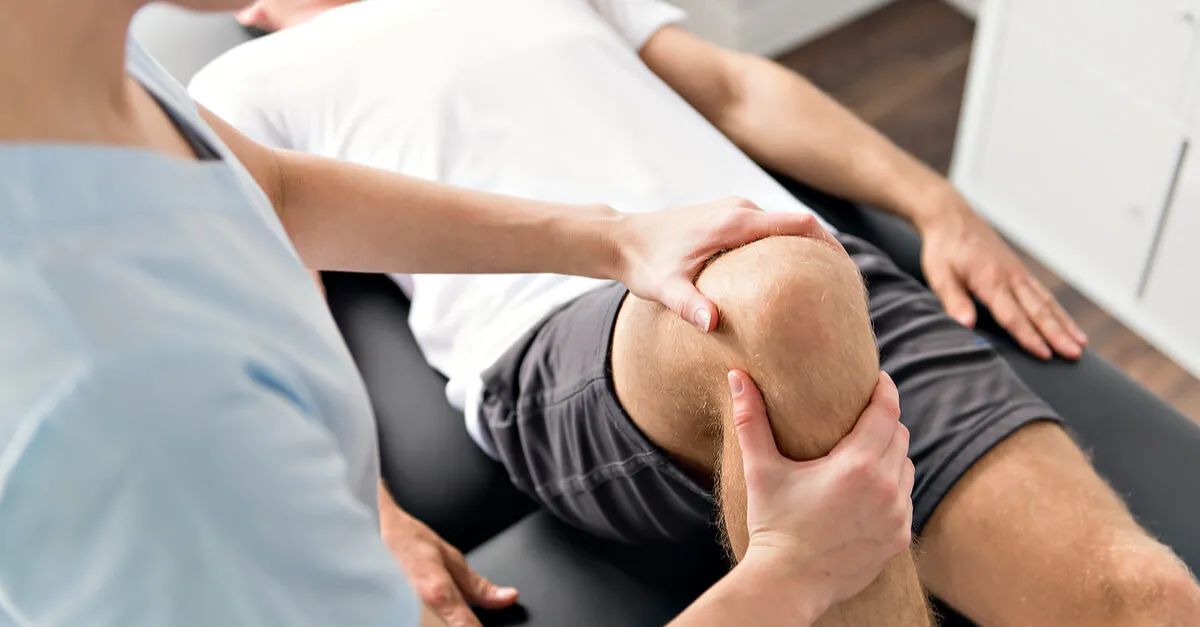
Hip & Knee Pain
When the hips and knees stop sharing load well, the low back often takes the hit. We treat the whole chain.

Joint Pain
Stiff, aching joints that limit your day. We restore the mechanics first, then build the strength.

Headaches
Tension that starts in the neck and spine can drive stubborn headaches. Relief starts with the source.