Parkinson’s Treatment in Rutherford
You have rested it, stretched it, and waited for it to pass. If the pain keeps deciding what you can and cannot do, one evaluation is where the plan finally changes.
How Parkinson's affects movement.
Parkinson's disease is a progressive neurological condition that changes how the brain sends movement signals to the body. It does not affect everyone the same way or on the same timeline, but for most people the changes show up first in how movement feels, slower to start, smaller than intended, or harder to control. Family members are often the ones who notice it first, a quieter voice, a shorter step, before the person living with the diagnosis fully does. Understanding what is actually happening is the first step toward a plan that targets it directly.

Bradykinesia is one of the hallmark effects of Parkinson's. Tasks that used to happen automatically, buttoning a shirt, standing up from a chair, turning around in the kitchen, start taking longer and require more conscious effort than they once did.
Rigidity is an increase in muscle tone that can make joints feel stiff and movement feel effortful, even at rest. It often shows up first in the arms, neck, or trunk, and can limit how freely you rotate, reach, or roll over in bed.
One of the more subtle effects of Parkinson's is that movements shrink over time, a shorter stride, a quieter voice, smaller handwriting, often without the person fully realizing the change is happening. This gradual reduction in movement amplitude tends to build slowly, which is exactly why it is easy to miss.
Parkinson's commonly affects how you walk: steps can become shorter and shuffling, arm swing decreases, and turning or changing direction gets harder. These changes tend to be gradual, but they quietly increase the effort it takes to walk confidently through a normal day.
As balance and gait shift, the risk of falling rises, particularly around turns, doorways, uneven ground, or doing two things at once, like carrying something while walking. Addressing this directly, rather than waiting for a fall to happen, is a core part of what we work on.
Parkinson's is progressive, but how quickly symptoms develop, and which ones show up first, varies a great deal from one person to the next. That is why an evaluation built around your specific movement patterns, not a generic checklist, matters so much.
How physical therapy helps manage Parkinson's symptoms.
Physical therapy does not treat or reverse Parkinson's disease itself, but it plays a well-established role in managing the movement symptoms that come with it. A therapist starts by identifying exactly which movement patterns have changed for you, then builds a program of functional movement training so everyday tasks like getting out of a chair, turning, or reaching stay manageable. Gait and balance training is a central piece of that work, aimed directly at reducing fall risk and rebuilding confidence in walking around your home and neighborhood. Because movement in Parkinson's tends to shrink gradually, amplitude-based retraining, deliberately practicing bigger, more forceful movement, is often part of the plan, and we offer LSVT BIG specifically for this purpose. The goal throughout is not a cure, it is helping you maintain independence in daily activities and the best quality of movement possible for as long as possible. Because Parkinson's is a progressive condition, care usually works best as an ongoing relationship rather than a single course of treatment. Periodic check-ins let your program adjust as your needs change, instead of waiting until a new problem has already taken hold.
What to expect from ongoing care.
Evaluation
Your first visit is a full evaluation of how you move: gait, balance, strength, rigidity, and movement amplitude. We identify which symptoms are affecting your daily activities most, and build a plan around your specific presentation and goals, not a generic protocol.
Targeted, hands-on treatment
Treatment targets the specific symptoms found in your evaluation: gait and balance training to reduce fall risk, hands-on work for rigidity and stiffness, and amplitude-focused exercise, including LSVT BIG, to counter the tendency for movement to shrink over time.
An ongoing, adjustable plan
Because Parkinson's is progressive, care does not end at a fixed number of visits. We build in periodic check-ins to track how your movement is changing, adjust your program accordingly, and help you maintain the independence and quality of movement you have worked for.
Rutherford PT: More Than Just Therapy, It's Family! This wasn't my first physical therapy experience, but it is easily the best!
Pain rarely travels alone.
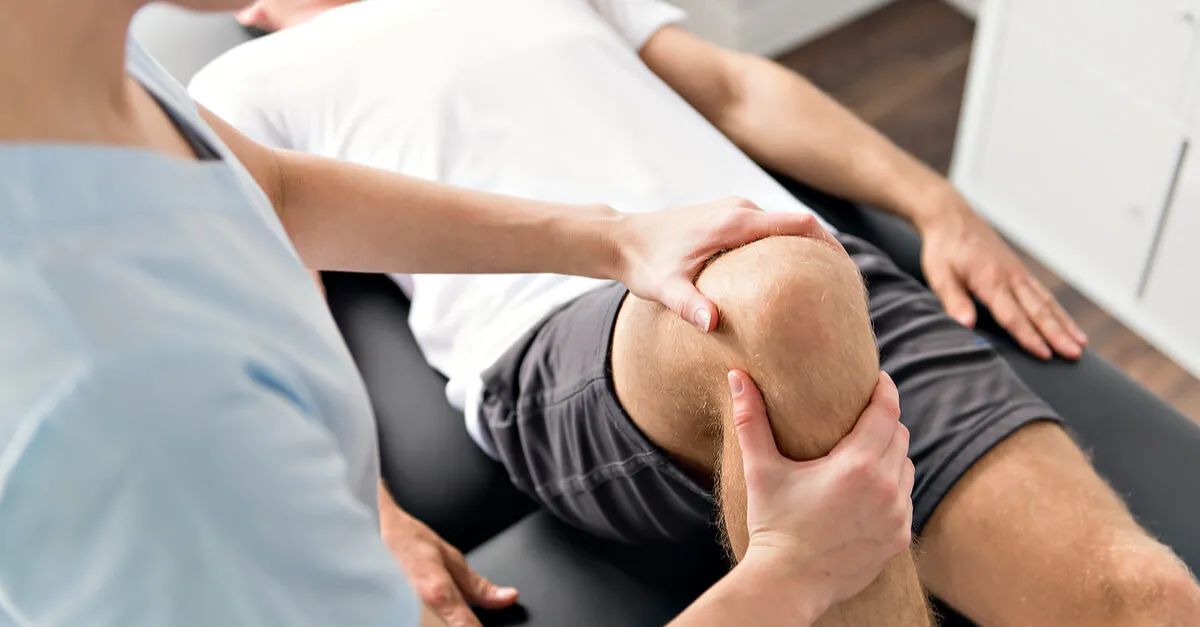
Hip & Knee Pain
When the hips and knees stop sharing load well, the low back often takes the hit. We treat the whole chain.

Joint Pain
Stiff, aching joints that limit your day. We restore the mechanics first, then build the strength.

Headaches
Tension that starts in the neck and spine can drive stubborn headaches. Relief starts with the source.