Tendinitis Treatment in Rutherford
You have rested it, stretched it, and waited for it to pass. If the pain keeps deciding what you can and cannot do, one evaluation is where the plan finally changes.
What causes tendinitis?
Tendinitis is inflammation or irritation of a tendon, and it almost always comes from overuse or repetitive strain, not a single injury. It can show up at the shoulder, elbow, like tennis or golfer's elbow, knee, Achilles, or wrist, and it develops when a tendon gets loaded faster than it can adapt and recover. Figuring out what's overloading the tendon, and why, is the first step to actually resolving it instead of just waiting for it to quiet down on its own.

Ramping up mileage, weight, reps, or hours on your feet faster than your tendon can adapt is one of the most common triggers we see. The tendon simply hasn't had time to build the capacity to handle the new demand.
Tennis elbow and golfer's elbow get their names from doing the same motion over and over. The same pattern shows up in jobs that repeat one movement all day, typing, gripping, lifting, or reaching overhead.
How you move matters as much as how much you move. A swing, a lift, or a throw that puts extra strain on one tendon will keep irritating it no matter how much you rest, until the mechanics themselves change.
It's the advice almost everyone gets, stop, ice it, wait it out. But a tendon that sits completely still doesn't heal, it deconditions. When you go back to activity, it's often just as weak as before, so the pain comes right back.
Current evidence points to progressive, controlled loading, not rest, as what helps a tendon remodel and get stronger. Too little load and it never adapts, too much and it stays irritated. Finding that middle ground is the work.
Once the pain fades, it's tempting to jump straight back into full activity. Without rebuilding the tendon's capacity first, the same overload that caused it the first time will cause it again.
How physical therapy helps with tendinitis.
Here's what most people never hear: tendinitis is not a "just rest it and hope" problem, and it usually doesn't need imaging or injections to start improving. A skilled physical therapist evaluates how you move to find the true source of the irritation, whether that's a sudden spike in load, a repetitive motion, or a mechanical fault that's been quietly overloading the tendon. Early on, hands-on soft-tissue treatment and honest load management calm things down, finding the right amount of activity, not zero and not too much. As the irritation settles, the focus shifts to progressive tendon-loading exercise, the kind of controlled, gradually increasing stress a tendon actually needs to heal and remodel. Along the way, we correct the movement pattern or training error that overloaded it in the first place, so the problem doesn't just resurface the moment you return to full activity. The result isn't just less pain today. It's a tendon that can handle the sport, the job, or the lift that caused the problem, without breaking down again.
What to expect as your tendon recovers.
Evaluation
Your first visit identifies exactly which tendon is irritated and, just as important, what's been overloading it, a training error, a repetitive motion, or a mechanical fault. You leave with a clear explanation of what's driving the pain and an honest timeline for recovery.
Calming it down
Hands-on treatment and smart load management ease the irritation while we help you find the right amount of activity, enough to keep the tendon moving, not so much that it stays angry. This is where most people are surprised that complete rest was never the answer.
Progressive tendon loading
We gradually increase how much load the tendon handles, in the exact way it needs to rebuild and remodel. This is the phase that gets you back to full activity and keeps the same overload from causing the same problem again.
Went to Rutherford Physical Therapy after a shoulder injury and wanted to get back to lifting. After working with Oscar, he got me back to lifting normally. He was extremely thorough for each session.
Pain rarely travels alone.
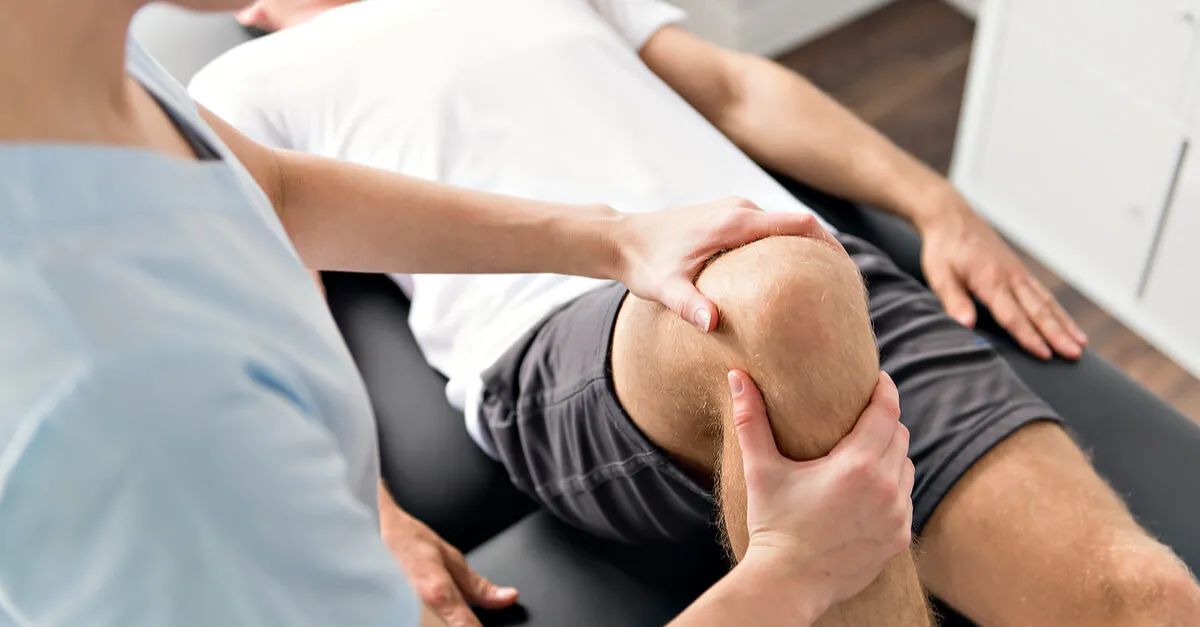
Hip & Knee Pain
When the hips and knees stop sharing load well, the low back often takes the hit. We treat the whole chain.

Joint Pain
Stiff, aching joints that limit your day. We restore the mechanics first, then build the strength.

Headaches
Tension that starts in the neck and spine can drive stubborn headaches. Relief starts with the source.