Thoracic Outlet Syndrome (TOS) Treatment in Rutherford
You have rested it, stretched it, and waited for it to pass. If the pain keeps deciding what you can and cannot do, one evaluation is where the plan finally changes.
What causes thoracic outlet syndrome?
Thoracic outlet syndrome is compression of the nerves or blood vessels that pass through the narrow space between your collarbone and first rib on their way to your arm. When that space gets squeezed, you feel it as pain, numbness, tingling, or weakness in your neck, shoulder, arm, or hand, often worse when you reach overhead or carry something heavy for even a few minutes. It's a hard symptom to explain to people who haven't felt it, and it often gets dismissed before anyone identifies the actual cause. Physical therapy addresses the cause directly by opening up that space and correcting the posture and muscle imbalances that narrowed it in the first place.
Rounded shoulders and a forward head position pull your collarbone down and back, narrowing the thoracic outlet and squeezing the nerves and vessels that pass through it. Hours spent at a desk or looking down at a phone make this worse every day.
The scalene muscles in your neck and the pectoral muscles across your chest sit right where the nerves and vessels pass through. When they get tight or overactive, they close off an already narrow space and put direct pressure on the structures running underneath.
Work or sport that has you reaching, throwing, or lifting overhead again and again asks the thoracic outlet to open and close under load, over and over. Swimmers, painters, and anyone who works with their arms above shoulder height are especially prone to this.
A past injury, a fall, whiplash, or a collarbone fracture that healed, can leave behind changes in posture or muscle balance that quietly narrow the space long after the original injury is gone.
Some people are simply built with a tighter thoracic outlet from the start, whether that's an extra cervical rib or a naturally narrower passage. It doesn't cause symptoms on its own, but it leaves less room for error once posture or muscle tension add pressure.
When the muscles that hold your shoulder blades back and down aren't doing their job, your shoulders round forward and stay there. Strengthening that support is often just as important as stretching the tight muscles pulling you out of position.
How physical therapy helps with thoracic outlet syndrome.
Here's what most people don't hear until they've already tried to wait it out: thoracic outlet syndrome responds well to conservative care, and physical therapy is the recommended first step before anything more invasive is even considered. A thorough evaluation identifies exactly where the compression is coming from, whether it's a tight muscle, a posture pattern, or a combination of both, so the plan targets the real cause instead of guessing. Treatment centers on opening up the thoracic outlet space itself. That means stretching and releasing the scalene and pectoral muscles pulling the space closed, and strengthening the upper trapezius and upper back muscles that hold your posture up when you aren't thinking about it. Alongside that, nerve gliding exercises help the irritated nerve move freely through the space again instead of catching and dragging with every reach. Posture retraining ties it together, so the space you worked to open stays open once you're back at your desk, behind the wheel, or reaching for something overhead. This isn't a handful of stretches on a printout. Every session is one on one, and the plan adjusts as your symptoms change, because a nerve that's still irritated needs a different approach than one that's already calming down.
What to expect from your recovery.
Evaluation
Your first visit is a full hands-on assessment of your posture, movement, and nerve symptoms. We test which positions bring on your numbness or tingling, check where the compression is actually happening, and rule out anything else that could explain what you're feeling. You leave with a clear explanation of what's driving the problem and an honest timeline for recovery.
Hands-on treatment
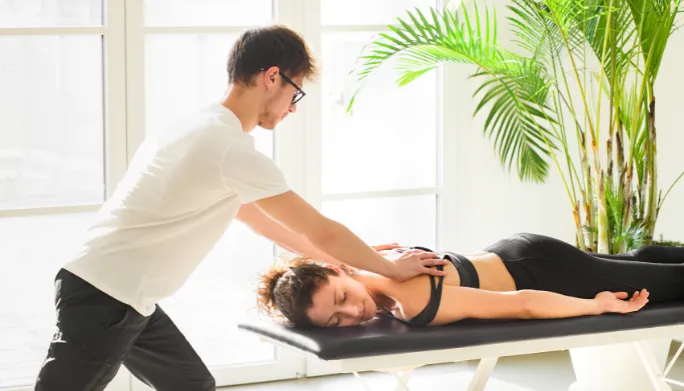
Next we get to work opening up the thoracic outlet. Hands-on treatment and targeted stretching release the tight scalene and pectoral muscles compressing the space, while nerve gliding exercises help the irritated nerve move freely again. You'll feel the difference in how far you can reach and how long you can hold a position before symptoms show up.
Progressive strengthening
As the space opens up, we shift to strengthening the upper back and shoulder blade muscles that hold your posture in place, plus retraining the postural habits that narrowed the space to begin with. This is the phase that keeps the compression from creeping back once you're back at work, at the gym, or carrying your kids.
Recieved wonderful care! Everyone was friendly and knowledgeable while making me feel welcome. Perfect atmosphere helped promote healing.
Pain rarely travels alone.

Hip & Knee Pain
When the hips and knees stop sharing load well, the low back often takes the hit. We treat the whole chain.

Joint Pain
Stiff, aching joints that limit your day. We restore the mechanics first, then build the strength.

Headaches
Tension that starts in the neck and spine can drive stubborn headaches. Relief starts with the source.